
ℹ
To learn more about this report –
Download Your Free Sample Report Here
The global Stem Cell Therapy Market encompasses therapeutic products and directly associated clinical services involving the administration or transplantation of stem cells and stem cell-derived products for the treatment of diseases, tissue repair, and functional restoration. The market includes approved hematopoietic stem cell transplantation-related therapies, authorized regenerative medicine products, and investigational stem cell-based treatments under clinical development. Major therapeutic approaches include allogeneic and autologous stem cell transplantation, mesenchymal stromal cell therapies, and stem cell-derived cell replacement technologies.
Research tools, laboratory reagents, cell culture media, isolation instruments, and general-purpose bioprocessing equipment form part of the supporting stem cell technology ecosystem but should not be included in therapeutic market revenue unless the report explicitly adopts a broader market definition and separately accounts for these categories. Market estimates should distinguish commercialized therapeutic revenue from clinical research expenditure, manufacturing services, and enabling technology sales to avoid double counting.
The US Stem Cell Therapy Market
The US Stem Cell Therapy Market is projected to reach USD 7.1 billion in 2024 and expand to USD 19.5 billion by 2033, registering a CAGR of 11.8% during the forecast period. Market development is supported by substantial investments in regenerative medicine research, the presence of established biotechnology companies, advanced cell processing infrastructure, and increasing clinical investigations involving stem cell-based technologies.

ℹ
To learn more about this report –
Download Your Free Sample Report Here
The United States is an important center for stem cell research and therapeutic development, with ongoing studies evaluating hematopoietic stem cells, mesenchymal stromal cells, induced pluripotent stem cells, and stem cell-derived therapeutic products. Established hematopoietic stem cell transplantation procedures play an important role in treating selected hematological disorders, while investigational approaches are being studied for diabetes, neurological diseases, cardiovascular disorders, and tissue regeneration.
Advances in cell isolation, genetic engineering, cryopreservation, and manufacturing technologies are supporting the development of more standardized and scalable therapeutic products. Regulatory oversight by the US Food and Drug Administration provides a framework for evaluating the safety, quality, and effectiveness of new treatments. Continued investment in clinical research, biotechnology innovation, and specialized manufacturing facilities is expected to support the development of the US Stem Cell Therapy Market throughout the forecast period.
Stem Cell Therapy Market Key Takeaways
- Global Market Value: The Global Stem Cell therapy Market size is estimated to have a value of USD 18.9 billion in 2024 and is expected to reach USD 54.7 billion by the end of 2033.
- The US Market Value: The US Stem Cell therapy Market is projected to be valued at USD 19.5 billion in 2033 from a base value of USD 7.1 billion in 2024 at a CAGR of 11.8%.
- By Therapy Segment Analysis: Allogeneic stem cell therapy dominates the therapy segment as it holds the highest market share in 2024.
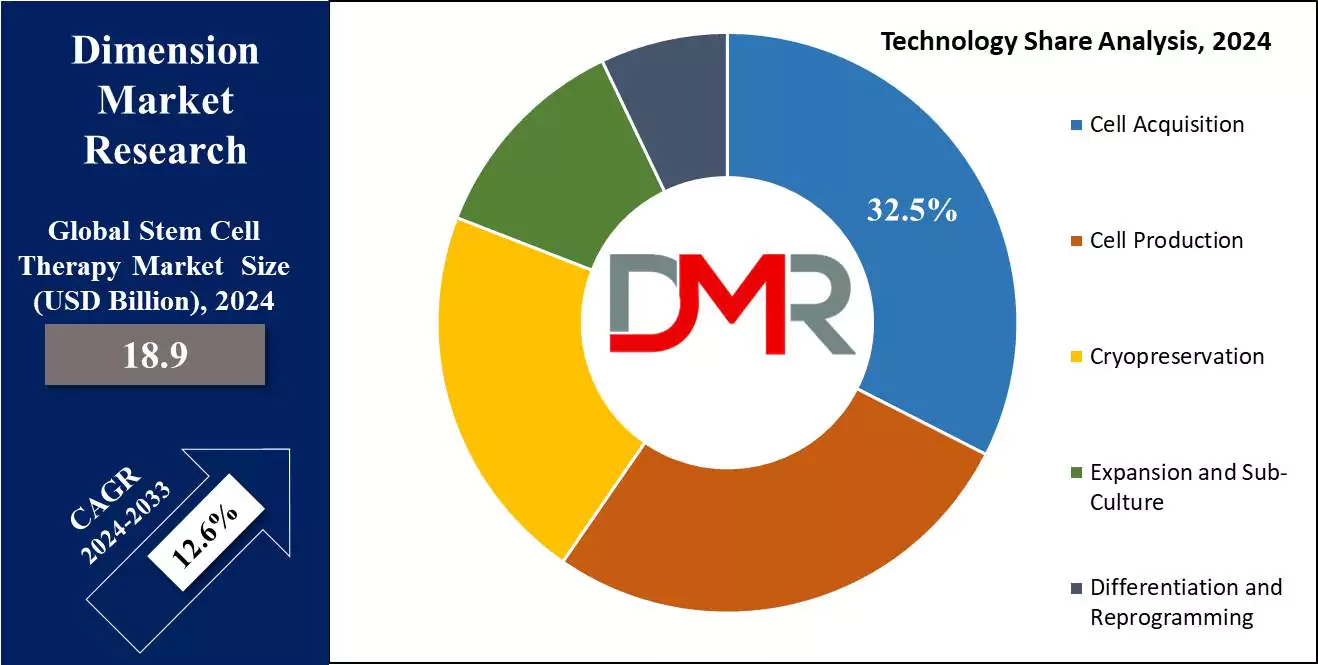
- By Technology Segment Analysis: Cell acquisition technology leads the technology segment of this market as it holds 32.5% of the market share in 2024.
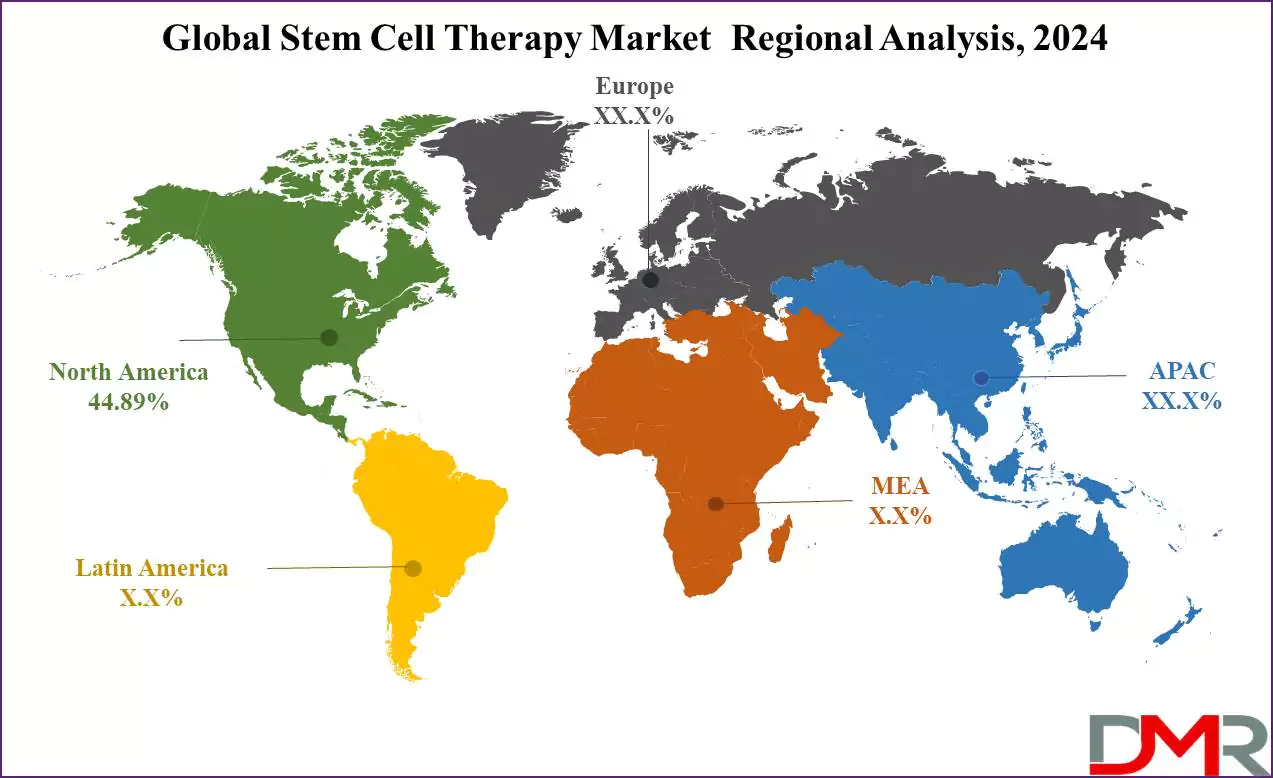
- Regional Analysis: North America is expected to have the largest market share in this market with a share of about 44.89% in 2024.
- Key Players: Some of the prominent participants in the global Stem Cell Therapy Market include Mesoblast Limited, Vertex Pharmaceuticals, Gamida Cell, JCR Pharmaceuticals, Pluri Inc., FUJIFILM Holdings Corporation, Lonza Group, Thermo Fisher Scientific, STEMCELL Technologies, and other key players.
- Global Growth Rate: The market is growing at a CAGR of 12.6 percent over the forecasted period.
Stem Cell Therapy Market Use Cases
- Musculoskeletal Disorders: Stem cell-based therapies, particularly those involving mesenchymal stromal cells, are being investigated for their potential to support cartilage repair, tissue regeneration, and the management of musculoskeletal conditions such as osteoarthritis and joint injuries. Clinical research is examining their safety, biological activity, and potential therapeutic benefits. However, stem cell injections for osteoarthritis and other orthopedic disorders are not FDA-approved treatments in the United States. Further controlled clinical studies are needed to determine their long-term safety and effectiveness.
- Cardiovascular Diseases: Stem cell-based approaches are being studied as potential treatments for cardiovascular conditions, including myocardial infarction and heart failure. Researchers are investigating whether selected cell populations can support tissue repair, influence inflammatory responses, or improve cardiac function. Although early-stage studies have generated scientific interest, these applications remain investigational, and stem cell therapies are not established FDA-approved treatments for heart failure or myocardial regeneration.
- Wound Healing: Stem cell-derived products and mesenchymal stromal cells are under investigation for their potential roles in tissue repair, inflammatory regulation, and healing of chronic wounds, including diabetic ulcers and severe tissue injuries. Research programs are exploring cellular mechanisms that may support tissue regeneration and improve wound management. However, clinical effectiveness depends on the specific product, indication, and available trial evidence, and these approaches should not be presented as universally approved treatments.
- Neurodegenerative Diseases: Stem cell-derived neural cells and other regenerative approaches are being investigated for potential applications in neurodegenerative diseases, including Parkinson's disease and Alzheimer's disease. Research is evaluating cell replacement strategies, neural differentiation, graft survival, and the potential to restore selected neurological functions. Despite scientific advances, these treatments remain experimental, and stem cell therapies have not received FDA approval for Parkinson's disease or Alzheimer's disease. Long-term safety, immune compatibility, cell integration, and clinical effectiveness remain important research challenges.
- Regulatory and Clinical Status: Stem cell therapies vary considerably in their clinical development and regulatory approval status. Certain hematopoietic stem cell and mesenchymal stromal cell therapies have received approval for specific medical indications, while many applications in orthopedics, neurology, cardiovascular medicine, and tissue regeneration remain investigational. Treatment availability, regulatory authorization, and clinical evidence differ across countries. Patients should seek guidance from qualified healthcare professionals and verify whether a particular stem cell product is approved for its intended medical use.
Stem Cell Therapy Market Dynamic
Trends
Rising Focus on Regenerative Medicine
The global market of stem cell therapy is gradually observing a shift in therapeutic trends toward the emerging area of regenerative medicine. It is driven by an increasing demand for the treatment of degenerative conditions related to cardiovascular diseases, neurodegenerative disorders, and orthopedic injuries. In tissue repair or the regeneration of impaired tissues or organs, regenerative medicine exploits the self-renewal and differentiation properties of stem cells mainly MSCs and iPSCs.
Advancements in Autologous and Allogeneic Therapies
Key trends that are gaining wider acceptance include autologous and allogeneic stem cell therapies. Autologous therapies are showing greater appeal due to the lower possibility of immune rejection and personalized treatment outcomes.
Meanwhile, allogeneic stem cell therapy is taken into consideration, by taking donor hematopoietic stem cells, especially for the treatment of blood cancers and genetic disorders. Advancements in cell isolation, gene editing, and cell expansion technologies are improving efficacy and availability for both autologous and allogeneic treatments.
Growth Drivers
Increasing Prevalence of Chronic Diseases
One of the key factors driving the growth of the global market in stem cell therapy includes the rising incidence of chronic diseases. Cardiovascular diseases, diabetes, neurological disorders, and cancers are on the increase due to changes in lifestyle and an aging population. These are, indeed, pathologies that have promising treatments; the regenerative answer lies with the stem cell therapies that help repair or replace destroyed tissues and organs.
Hematopoietic stem cells, for example, are being increasingly applied in the treatment of blood cancers, while mesenchymal stem cells have shown potential in cardiovascular and neurodegenerative disorders.
Technological Advancements in Stem Cell Therapies
CRISPR gene editing, 3D bioprinting, and advanced cell expansion techniques that involve the use of stem cells more efficient, scalable, and safe. Furthermore, these advances are complemented by cryopreservation and improvements in cell production to guarantee the viability and longevity of stem cells for large quantities that can be widely distributed.
These technological innovations of stem cells make therapies more accessible, thus accelerating market growth as more therapies become viable options for treatment by a greater percentage of healthcare providers.
Growth Opportunities
Emerging Markets and Government Support
This can also be expected to provide enormous growth opportunities for the global stem cell therapy market, considering the large growth potentials of the emerging economies in Asia-Pacific and Latin America. This includes increased investments that emerge in health infrastructure, like China, Japan, and South Korea, coupled with stem cell research.
Governmental support across the regions, through regulatory frameworks that promise to boost this development and funding for clinical trials, also fosters stem cell treatment growth. For example, Japan has already introduced progressive policies related to regenerative medicine, and it is considered one of the pioneers in stem cell-related innovations.
Expansion in Clinical Applications
Another key growth opportunity will be represented by the extension of the clinical application of stem cell therapies. They foresee the use of stem cell therapies in the treatment of not only hematological conditions but also orthopedic, neurological, cardiovascular, and autoimmune conditions, among others.
Increasing clinical trials for new therapeutic areas, such as the treatment of wounds and injuries, and genetic disorders, are extending the market potential of these therapies. So, as the success rate for these trials continues increasing, the range of applications of this stem cell will widen, thereby leading more healthcare providers to this innovative therapy, hence driving market growth in the forecast period.
Restraints
High Cost of Stem Cell Therapies
Even with the promising potential of stem cell therapies, the treatment expense supporting the procedures remains among the key restraints. This is largely because acquisition and isolation, expansion, and cryopreservation of cells are intricate processes that require sophisticated technologies and infrastructures, hence running at very high costs for treatment. This personalized nature of the treatment-for instance, therapies involving autologous stem cells can make such treatments very expensive.
Additionally, there are costs associated with clinical trials, regulatory approvals, and commercialization. These high costs limit accessibility to stem cell therapies, especially within developing regions, which is a factor that frankly speeds up the market growth.
Ethical and Regulatory Challenges
The ethical concern in using embryonic stem cells has been identified as another major drawback to the development of the global stem cell therapy market. The research and therapeutic application of human embryonic stem cells has thus been surrounded by ethical debates due to the generalized destruction of embryos, hence very strict regulations in most countries.
These restrictions will act as barriers to progress in this field of research and hamper the development of therapies derived from embryonic cells. Added to this is the need to navigate multifarious regulatory frameworks for different countries, which are also variable, raising challenging conditions faced by market players and constraining the ability of the market to expand in such regions.
Stem Cell Therapy Market Research Scope and Analysis
By Therapy
In the global stem cell therapy market, allogeneic stem cell therapy dominates the therapy segment because of its high therapeutic potential and wider applicability. Allogeneic stem cell therapy is thereby considered a more promising therapy compared to autologous stem cell therapy, in which treatment depends upon the patient's cells. On the other hand, allogeneic stem cell therapy uses stem cells from a donor.
ℹ
To learn more about this report –
Download Your Free Sample Report Here
There are a couple of advantages to this: the most important ones being that it can make available off-the-shelf stem cell products for administration to multiple patients. This is important scalability in the treatment of conditions requiring immediate intervention, such as acute graft versus host disease, leukemia, and certain cancers.
Moreover, allogeneic stem cells-especially from bone marrow, umbilical cord blood, and peripheral blood can be readily supplied through established cell banking. This is done to allow a much larger volume of cell administration-oftentimes required for the needed curative effect, especially in the cases of life-threatening diseases.
Allogenic stem cell therapy is also increasingly preferred for conditions where the cells of the patient themselves may not be viable for treatment, including disorders of the immune system and genetic diseases. The improvement of techniques of immunosuppression has reduced further the chances of rejection in allogeneic stem cell therapy, hence making it safer and more dependable.
The rising demand for regenerative medicine is going to keep allogeneic stem cell therapy dominant in the therapy market during the forecast period and provide the undergoing market with substantial market growth.
By Cell Source
Among the cell sources, the segment of the adult stem cell leads the global stem cell therapy market, due to their easy availability and established therapeutic benefits. The ethical issues concerning ESCs are also lower for adult stem cells.
Adult tissues like bone marrow, adipose tissue, and peripheral blood serve as sources for stem cells such as hematopoietic stem cells and mesenchymal stem cells. These cells have been in clinical use for several decades and are widely applied in the treatment of blood disorders such as leukemia and lymphoma.
Most clinical applications of stem cells to date have involved adult stem cells, mainly because potential tumorigenesis is lower compared to that of embryonic stem cells. The differentiation capacity of an ASC is more limited; this renders the ASCs much safer for therapeutic application, preserving the lower capability of forming teratomas or any other unwanted tissues. Also, in autologous stem cell therapy in which a patient's cells are used to prevent possible immune rejection use of adult stem cells is preferred.
Besides, the approval processes taken by adult stem-based therapies have been smoother compared to human embryonic stem cells and induced pluripotent stem cells, hence their increased usage in the stem cell therapy market. Because of their potency to differentiate into a wide range of cell types, ranging from bone and cartilage to muscle and fat cells, they are one of the versatile approaches to regenerative medicine, considering diseases of musculoskeletal disorders, cardiovascular diseases, and even skin wound healing.
Therefore, with the increasing demand for adult stem cells, market growth will be expected to be driven during the forecast period.
By Technology
Cell acquisition technology leads the technology segment of the global stem cell therapy market. This may be ascribed to the fact that high-quality stem cells are necessary for various therapeutic purposes and this is only possible through this technique. This technique involves collection from several sources such as bone marrow, peripheral blood, and umbilical cord blood.
These sources, especially bone marrow-derived stem cells and umbilical cord blood, form a significant basis for the treatment since they are the raw materials needed for the various forms of therapies. The dominance of this technology is mainly because it forms a pre-requisite for successful autologous and allogeneic stem cell therapies.
Given that steps of processing, expansion, and application can be effective only when there are efficient and safe methods of harvesting, bone marrow aspiration, apheresis, and the collection of cord blood have become established in clinical practice as reliable methods to harvest stem cells with minimal risk to the donor or patient.
Also, besides the development of methods of cell acquisition, such as better apheresis machines and the enhancement of bone marrow harvesting, the processes are getting faster, more efficient, and less invasive. This, in turn, has increased the availability of stem cells for therapeutic use and helped minimize the general cost of treatments with stem cells. While demands for stem cell therapies increase, technologies of cell acquisition will continue to play a key role in the market, boosting growth in the forecasted period.
By Administration
Due to its efficacy in treating joint-related conditions, the intra-articular route of administration constitutes the dominant segment of the route of administration section in the global stem cell therapy market. Intra-articular injections deliver the stem cells into the joint space directly, which enables the imparting of local treatment to the damaged joint cartilage and tissues. This form of administration enables the target tissue to have a more concentrated dose of stem cells, which may accelerate the process of tissue regeneration and alleviate pain.
The major advantage of intra-articular administration is that the delivery method is less invasive compared to surgical methods. Most patients with degenerative joint diseases would avoid surgery at all costs since other alternative treatments ensure quicker recovery and fewer risks.
Thus, intra-articular injections are a solution of convenience and efficiency, especially in elderly patients or those with comorbid conditions that make surgery hazardous. Additionally, the burgeoning prevalence of osteoarthritis and other joint disorders is increasing the demands placed on intra-articular stem cell therapies.
Moreover, advances in imaging technologies, such as ultrasound and MRI, have improved the accuracy of intra-articular injections by ensuring the deposition of stem cells precisely at damaged areas. All these have significantly enhanced the efficacy of the stem cell therapies administered for joint disorders and, therefore, increased the demand for this route of administration. With ongoing research into musculoskeletal disorders, this route of administration is poised to retain its lead within the global stem cell therapy market.
By Application
The application landscape of the global Stem Cell Therapy Market includes hematological disorders, acute graft-versus-host disease, musculoskeletal conditions, wound healing, cardiovascular diseases, gastrointestinal disorders, and other therapeutic areas. Established hematopoietic stem cell transplantation procedures are used in the management of selected blood cancers and hematological diseases, while certain approved mesenchymal stromal cell therapies are available for specific indications such as steroid-refractory acute graft-versus-host disease.
Research involving mesenchymal stromal cells, induced pluripotent stem cells, and other stem cell-derived products is expanding the range of potential therapeutic applications. Clinical investigations are evaluating these technologies for cartilage repair, cardiovascular tissue regeneration, neurological disorders, and chronic wound management. However, many of these applications remain investigational, and their clinical adoption depends on evidence demonstrating safety, effectiveness, and appropriate regulatory authorization.
Advances in cell manufacturing, genetic engineering, differentiation protocols, and cryopreservation technologies are supporting continued research and development. Pharmaceutical companies, biotechnology developers, hospitals, and academic institutions are contributing to the evaluation of new cell-based treatment approaches. As clinical evidence develops, stem cell-based technologies may create additional therapeutic opportunities across a range of medical conditions.
By End User
Pharmaceutical and
biotechnology companies have always led in the research, development, and commercialization of treatments utilizing stem cells. They provide both financial support and technical expertise to advance therapeutic uses for stem cells. Companies invest heavily in stem cell therapies through
clinical trials for treating chronic illnesses like cancer, neurodegenerative conditions, and cardiovascular conditions - while their emphasis on regenerative medicine remains an attractive point.
Pharmaceutical and biotech companies are spearheading efforts to translate stem cell research into effective treatments, including cell-based therapies. Other companies increasingly specialize in personalized medicine, where stem cell therapies can be tailored specifically to individual patient's individual needs, providing benefits associated with traditional modes of therapy.
Strategic partnerships and collaborations with academic institutions and research centers further augment pharmaceutical and biotechnology companies' capability of exploring stem cell-related applications, providing more opportunities for finding treatments through academic, and industrial collaboration making these firms crucial stakeholders within stem cell therapy industries.
The Stem Cell therapy Market Report is segmented on the basis of the following
By Therapy
- Allogeneic Stem Cell Therapy
- Autologous Cellular Immunotherapies
- Autologous Stem Cell Therapy
- Syngeneic Stem Cell Therapy
By Cell Source
- Adult Stem Cells (ASCs)
- Hematopoietic Stem Cells (HSCs)
- Mesenchymal Stem Cells (MSCs)
- Neural Stem Cells
- Epithelial/Skin Stem Cells
- Others
- Human Embryonic Stem Cells (HESCs)
- Induced Pluripotent Stem Cells (iPSCs)
- Very Small Embryonic Stem Cells
By Technology
- Cell Acquisition
- Bone Marrow Harvest
- Umbilical Blood Cord
- Apheresis
- Cell Production
- Therapeutic Cloning
- In-vitro Fertilization
- Cell Culture and Isolation
- Gene Editing
- Cryopreservation
- Expansion and Sub-Culture
- Differentiation and Reprogramming
By Route of Administration
- Intraarticular
- Intracoronary
- Intramuscular
- Intramyocardial
- Intrathecal
- Intravenous
- Surgical Implantation
By Application
- Musculoskeletal Disorders
- Acute Graft Versus Host Disease (GVHD)
- Wounds and Injuries
- Cardiovascular Diseases
- Surgeries
- Gastrointestinal Diseases
- Other Applications
By End User
- Pharmaceutical and Biotechnology Companies
- Hospitals & Cell Banks
- Academic & Research Institutes
How Does Artificial Intelligence Contribute To Improve Stem Cell Therapy Market?
- Accelerated Research and Discovery: AI expedites the identification of stem cell differentiation pathways and potential therapeutic targets by analyzing large datasets from genomics, proteomics, and other studies. It helps predict cell behavior and optimize stem cell modifications for specific applications.
- Personalized Therapies: AI enhances personalized medicine by analyzing patient-specific data to develop tailored stem cell treatments. It predicts treatment efficacy and minimizes risks, ensuring optimal outcomes for individual patients.
- Clinical Trial Optimization: AI streamlines clinical trials by identifying suitable candidates, predicting trial outcomes, and improving study designs. It reduces time and costs associated with developing stem cell therapies.
- Quality Control: AI-powered systems monitor stem cell manufacturing processes, ensuring consistency, precision, and compliance with regulatory standards. Machine learning algorithms detect anomalies during production to maintain high-quality therapies.
- Predictive Analytics: AI provides insights into disease progression and treatment responses, enabling clinicians to refine therapeutic strategies and improve patient outcomes.
Stem Cell Therapy Market Regional Analysis
North America is expected to dominate the global Stem Cell Therapy Market, accounting for approximately 44.89% of total market revenue in 2024. The region benefits from advanced healthcare infrastructure, substantial investments in regenerative medicine research, and the presence of pharmaceutical companies, biotechnology developers, academic research institutions, and specialized cell therapy manufacturing facilities.
ℹ
To learn more about this report –
Download Your Free Sample Report Here
The United States plays a central role in regional development, supported by clinical research activities, established transplant centers, and regulatory oversight from the US Food and Drug Administration. Regulatory progress in approved stem cell-based therapies, along with continued investment in investigational regenerative medicine products, is supporting innovation across North America. Canada also contributes through academic research programs, clinical investigations, and biotechnology development activities. These factors are expected to support North America's position in the global market throughout the forecast period.
By Region
North America
Europe
- Germany
- The U.K.
- France
- Italy
- Russia
- Spain
- Benelux
- Nordic
- Rest of Europe
Asia-Pacific
- China
- Japan
- South Korea
- India
- ANZ
- ASEAN
- Rest of Asia-Pacific
Latin America
- Brazil
- Mexico
- Argentina
- Colombia
- Rest of Latin America
Middle East & Africa
- Saudi Arabia
- UAE
- South Africa
- Israel
- Egypt
- Rest of MEA
Stem Cell Therapy Market Competitive Landscape
The global Stem Cell Therapy Market includes biotechnology companies developing stem cell-derived therapeutic products, pharmaceutical manufacturers investing in regenerative medicine, and specialized organizations providing cell processing and manufacturing services. Companies such as Mesoblast, Vertex Pharmaceuticals, Gamida Cell, JCR Pharmaceuticals, and Pluri are associated with stem cell-based therapeutic development or related technologies. Meanwhile, Lonza, FUJIFILM, Thermo Fisher Scientific, STEMCELL Technologies, Sartorius, and other technology providers support the industry through manufacturing services, research products, cell processing platforms, and specialized laboratory solutions.
Competition in therapeutic development is influenced by clinical trial outcomes, regulatory approvals, manufacturing scalability, product safety, treatment effectiveness, and intellectual property. Research and manufacturing technology providers compete on process reliability, quality control, scalability, regulatory compliance, and integration with cell therapy development workflows. Continued investment in clinical research, manufacturing infrastructure, and strategic partnerships is expected to influence the development of the broader stem cell therapy ecosystem.
Some of the prominent players in the Global Stem Cell therapy Market are
- Mesoblast Limited
- Vertex Pharmaceuticals Incorporated
- Gamida Cell Ltd.
- JCR Pharmaceuticals Co., Ltd.
- Pluri Inc.
- Astellas Pharma Inc.
- FUJIFILM Holdings Corporation
- Lonza Group AG
- Takeda Pharmaceutical Company Limited
- STEMCELL Technologies Inc.
- Thermo Fisher Scientific Inc.
- Merck KGaA
- Sartorius AG
- Bio-Techne Corporation
- Other Key Players
Stem Cell Therapy Market Recent Developments
- December 2025: The US Food and Drug Administration approved an expanded indication for Gamida Cell's Omisirge (omidubicel-onlv), an umbilical cord blood-derived hematopoietic stem cell therapy, for patients aged six years and older with severe aplastic anemia following reduced-intensity conditioning. The approval expanded the product's clinical applications beyond its previously authorized use in patients with hematologic malignancies.
- December 2024: The US Food and Drug Administration approved Mesoblast's Ryoncil (remestemcel-L-rknd), the first FDA-approved mesenchymal stromal cell therapy, for steroid-refractory acute graft-versus-host disease in pediatric patients aged two months and older. The approval represented an important regulatory milestone for allogeneic cell-based therapies.
- July 2022: Pluristem Therapeutics Inc. changed its corporate name to Pluri Inc., reflecting the company's broader strategic focus on cell-based technologies and products. The company retained its expertise in cell expansion and manufacturing technologies while expanding its business development activities.
- 2022: Vertex Pharmaceuticals completed its acquisition of ViaCyte, a biotechnology company developing stem cell-derived therapies for type 1 diabetes. The acquisition strengthened Vertex's portfolio of investigational cell replacement therapies and associated regenerative medicine technologies.
Stem Cell Therapy Market Report Details
|
Report Characteristics
|
| Market Size (2024) |
USD 18.9 Bn |
| Forecast Value (2033) |
USD 54.7 Bn |
| CAGR (2024-2033) |
12.6% |
| Historical Data |
2018 – 2023 |
| The US Market Size (2024) |
USD 7.1 Bn |
| Forecast Data |
2025 – 2033 |
| Base Year |
2023 |
| Estimate Year |
2024 |
| Report Coverage |
Market Revenue Estimation, Market Dynamics, Competitive Landscape, Growth Factors and etc. |
| Segments Covered |
By Therapy (Allogeneic Stem Cell Therapy, Autologous Cellular Immunotherapies, Autologous Stem Cell Therapy, Syngeneic Stem Cell Therapy), By Cell Source (Adult Stem Cells (ASCs), Human Embryonic Stem Cells (HESCs), Induced Pluripotent Stem Cells (iPSCs), and Very Small Embryonic Stem Cells), By Technology (Cell Acquisition, Cell Production, Cryopreservation, Expansion and Sub-Culture, and Differentiation and Reprogramming), By Route of Administration (Intraarticular, Intracoronary, Intramuscular, Intramyocardial, Intrathecal, Intravenous, and Surgical Implantation), By Application (Musculoskeletal Disorders, Acute Graft Versus Host Disease (AGVHD), Wounds and Injuries¸ Cardiovascular Diseases, Surgeries, Gastrointestinal Diseases, and Other Applications), By End Users (Pharmaceutical and Biotechnology Companies, Hospitals & Cell Banks, and Academic & Research Institutes) |
| Regional Coverage |
North America – The US and Canada; Europe – Germany, The UK, France, Russia, Spain, Italy, Benelux, Nordic, & Rest of Europe; Asia- Pacific– China, Japan, South Korea, India, ANZ, ASEAN, Rest of APAC; Latin America – Brazil, Mexico, Argentina, Colombia, Rest of Latin America; Middle East & Africa – Saudi Arabia, UAE, South Africa, Turkey, Egypt, Israel, & Rest of MEA |
| Prominent Players |
Thermo Fisher Scientific Inc, STEMCELL Technologies Inc., Merck KGaA, Sartorius AG (CellGenix GmbH), PromoCell GmbH, Takara Holdings Inc., Lonza, ATCC, AcceGen, Cell Applications Inc., Bio-Techne, Cellular Engineering Technologies, and Other Key Players |
| Purchase Options |
We have three licenses to opt for: Single User License (Limited to 1 user), Multi-User License (Up to 5 Users) and Corporate Use License (Unlimited User) along with free report customization equivalent to 0 analyst working days, 3 analysts working days and 5 analysts working days respectively. |