What is the Global Data Center Security Market Size?
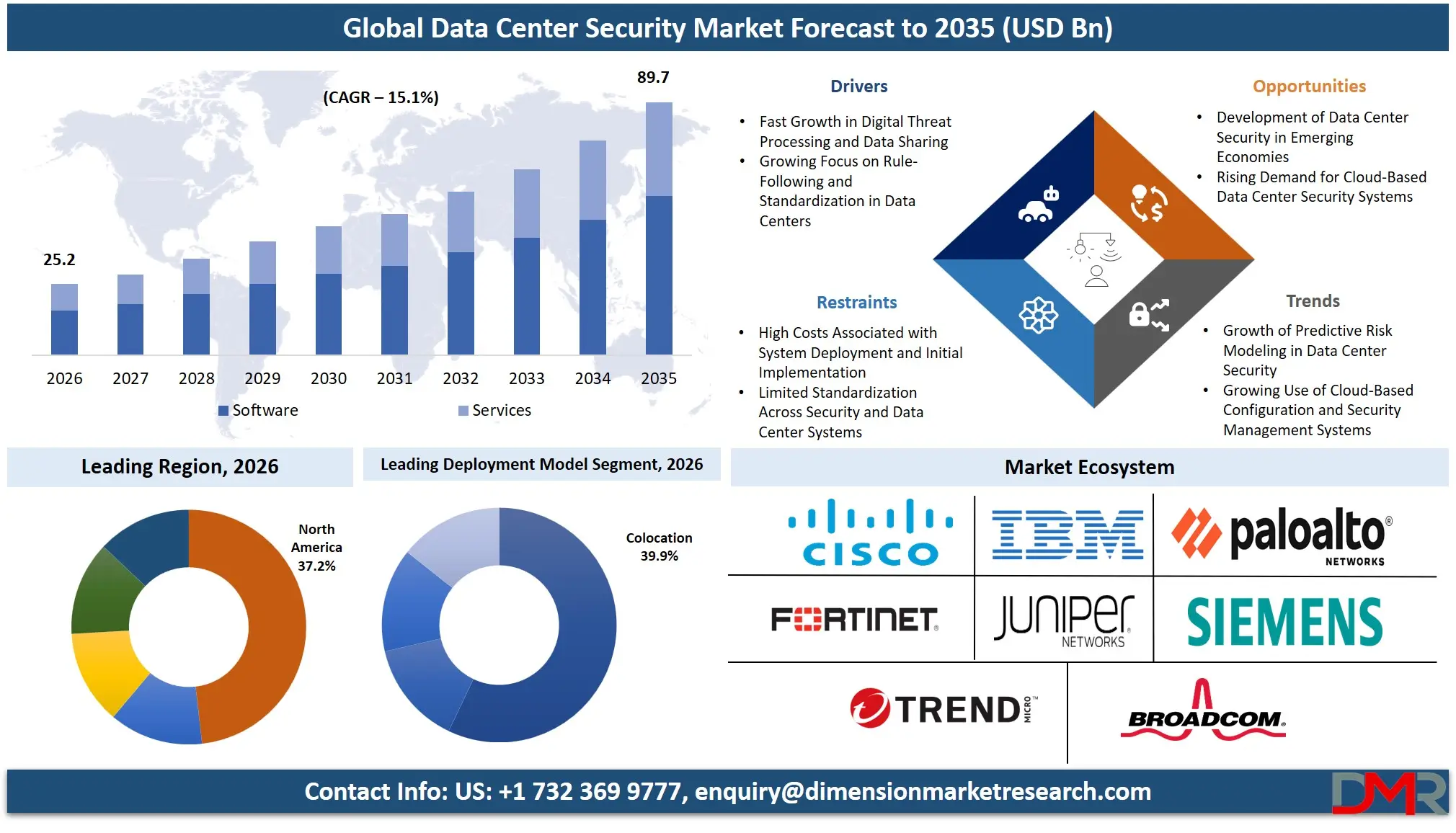
The Global Data Center Security Market is estimated to reach USD 25.2 billion in 2026 and is projected to grow to USD 89.7 billion by 2035, registering a CAGR of 15.1% during the forecast period. Market growth is supported by increasing cybersecurity threats, expanding hyperscale and colocation infrastructure, and growing demand for advanced physical and digital security systems across critical data center environments.
ℹ
To learn more about this report –
Download Your Free Sample Report Here
The rapid expansion of cloud computing, artificial intelligence workloads, and high-density computing infrastructure is increasing the need for comprehensive security solutions. Data center operators are investing in network security, identity and access management, workload protection, encryption, physical access control, and continuous threat monitoring to prevent unauthorized access, ransomware incidents, distributed denial-of-service attacks, and operational disruptions.
The adoption of Zero Trust security architectures is gaining importance as enterprises seek to protect distributed applications, sensitive information, and interconnected computing environments. Technologies such as microsegmentation, privileged access management, endpoint detection, and security information and event management are helping organizations strengthen protection across hybrid and multi-cloud infrastructure.
Regulatory requirements, including the European Union's NIS2 Directive and the Digital Operational Resilience Act (DORA), are influencing cybersecurity investment among affected digital infrastructure providers and financial institutions. Continued expansion of colocation facilities and hyperscale data centers is also creating demand for integrated security systems that support multi-tenant isolation, compliance monitoring, business continuity, and operational resilience.
ℹ
To learn more about this report –
Download Your Free Sample Report Here
The US Data Center Security Market
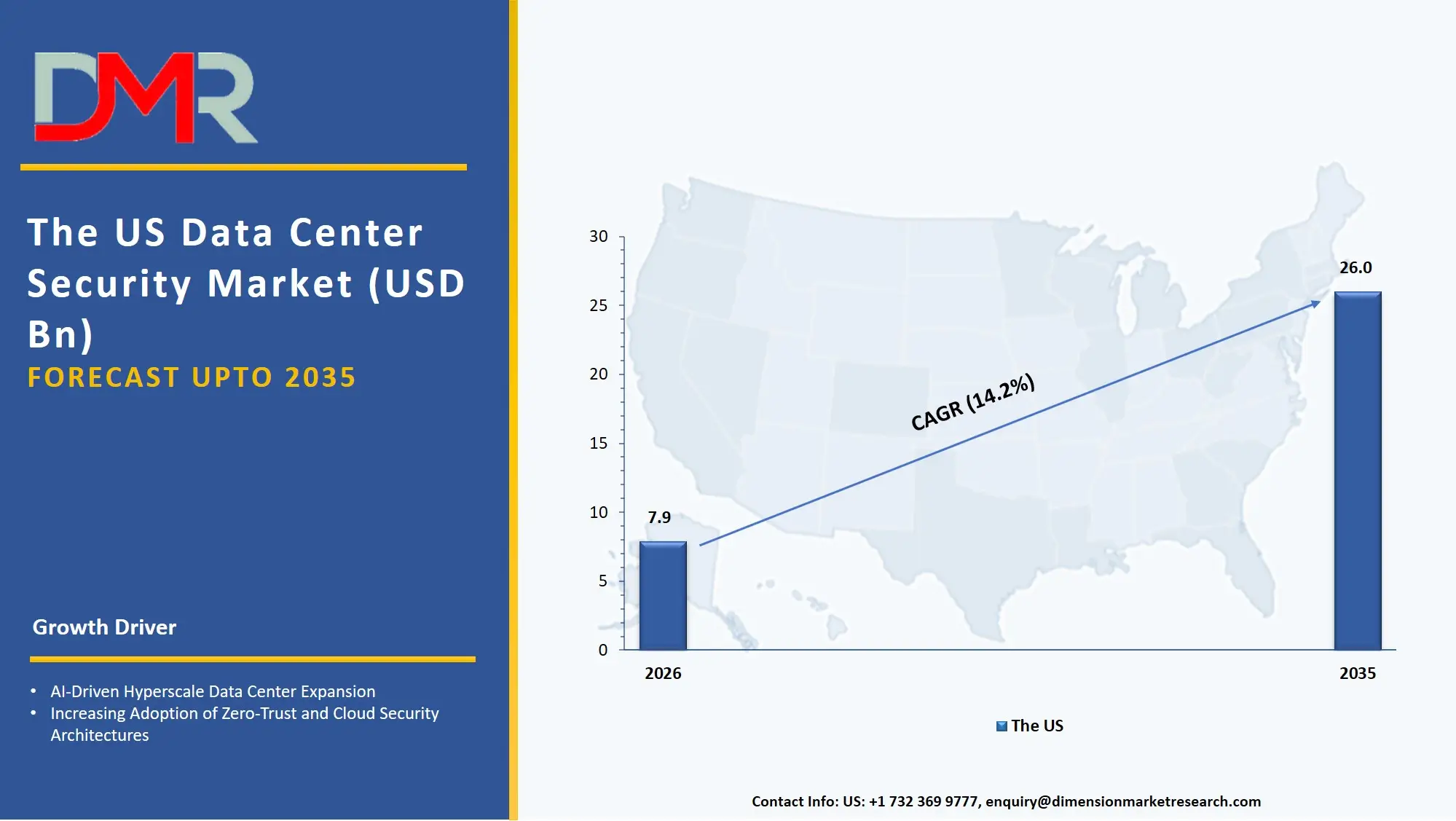
The US Data Center Security Market is estimated to grow to USD 7.9 billion in 2026 with a compound annual growth rate of 14.2% during the forecast period.
ℹ
To learn more about this report –
Download Your Free Sample Report Here
The US market is shaped by major federal and state-level programs promoting critical infrastructure protection, cybersecurity affordability programs supported by CISA, and NIST-led security initiatives. These programs encourage the use of smart threat testing, real-time customer data analysis, and predictive deployment software. Automated compliance platforms are being rapidly adopted, and the US continues to invest in better data sharing between research labs, security record systems, and reliable smart tools for data centers. Service providers are also influenced by laws like the Federal Information Security Modernization Act (FISMA) and national cyber strategies to offer services that ensure data safety, rule-following, and smooth integration across enterprise security and customer portals.
Europe Data Center Security Market
The Europe Data Center Security Market is estimated to be valued at USD 6.6 billion in 2026, witnessing growth at a CAGR of 13.8%, during the forecast period.
Europe's data center security market is well-established, shaped by EU-wide policies such as the NIS2 Directive, the European Digital Decade program and national policies to support digital resilience (e.g., Germany's cybersecurity strategies and France's national cloud protection plans 2030). Countries are also making security processes more flexible to align provider and enterprise demands and enable the sharing of threat data across borders. The market grows due to new tools like software for real-time vulnerability validation and scoring systems for zero-trust architectures. Use is made easier by teamwork between public and private groups and shared data rules. Manufacturers have access to technologies such as cloud computing and secure record-keeping, and Europe is at the forefront of the digitisation of safe and efficient security operations.
Japan Data Center Security Market
The Japan Data Center Security Market is projected to be valued at USD 1.6 billion in 2026, progressing at a CAGR of 16.2%, during the period spanning from 2026 to 2035.
Japan's data center security market is well developed, with high-quality digital monitoring platforms, connected threat management systems, and a wide array of smart risk analysis software tools. National focus on automation, efficiency and process integrity is delivered via predictive threat models and smart asset management. Growth opportunities are helped by government measures under the Society 5.0 program by Japan's Ministry of Economy, Trade and Industry (METI), and continued investment in digital preventive cybersecurity. Threat research, industrial security analysis for sector-specific solution development and enterprise security all need effective smart software to keep pace with data analysis. Higher costs for validating new automation systems and connecting them with older operational systems are significant, but there are opportunities for the export of Japanese security technologies to the Asian and Pacific markets.
Key Takeaways
- Market Size & Forecast: The Global Data Center Security Market is estimated to be valued at USD 25.2 billion in 2026 and is expected to grow to USD 89.7 billion by 2035.
- Growth Rate & Outlook: The market is expected to witness growth at a compound annual growth rate of 15.1% in the forecast period.
- Primary Growth Drivers: Increasing adoption of Zero Trust security architectures, rising AI workload security requirements, expansion of hyperscale and colocation data centers, and regulatory compliance obligations under frameworks such as NIS2 and DORA are supporting market growth.
- Key Market Trends: The predictive profiling of infrastructure risks, real-time threat data handling and the shift to cloud-based security and asset management platforms are key market trends.
- By Component: Solutions are expected to account for approximately 64.4% of the Global Data Center Security Market in 2026, supported by demand for network security, physical security, identity and access management, endpoint protection, and integrated threat detection systems.
- By Data Center Type: Colocation data centers are projected to account for approximately 39.9% of market revenue in 2026, while Hyperscale data centers are expected to experience strong growth as cloud and AI infrastructure expands.
- By End-User: IT & Telecommunication is estimated to take the lead in 2026 with the largest share in the data center security market.
- Regional Leadership: North America is estimated to take the lead in 2026 with 37.2% share in the data center security market, owing to significant investment in critical infrastructure and cybersecurity technologies.
What is Data Center Security?
Data center security refers to the combination of physical safeguards, cybersecurity technologies, operational policies, and monitoring practices used to protect data center infrastructure, computing systems, network equipment, applications, and sensitive information from unauthorized access, cyberattacks, theft, and operational disruption. It includes both physical security measures, such as surveillance, biometric access controls, and perimeter protection, and digital security solutions, such as firewalls, encryption, intrusion detection, identity and access management, and endpoint protection.
Modern data center security frameworks increasingly incorporate Zero Trust principles, continuous threat monitoring, network segmentation, and automated incident response to address vulnerabilities across enterprise, colocation, hyperscale, and edge environments. These capabilities help organizations maintain service availability, protect critical workloads, comply with applicable regulations, reduce security risks, and strengthen infrastructure resilience against evolving physical and cyber threats.
Use Cases
- DDoS Attack Detection and Mitigation: Data center security solutions help protect critical applications and network infrastructure from distributed denial-of-service attacks that can overwhelm connectivity and disrupt services. Network monitoring, traffic filtering, rate limiting, and automated mitigation technologies support service continuity across enterprise, hyperscale, and colocation environments.
- Multi-Tenant Security and Workload Isolation: Colocation and cloud data centers serve multiple customers within shared infrastructure environments, creating requirements for secure tenant separation. Network segmentation, virtualization security, identity controls, and workload isolation help prevent unauthorized lateral movement and reduce the risk of security incidents affecting neighboring customer environments.
- Identity and Privileged Access Management: Data center operators use identity management, multi-factor authentication, privileged access controls, and continuous verification to restrict access to sensitive infrastructure. These solutions support secure administration of servers, storage systems, networking equipment, and cloud management platforms while improving accountability for authorized users and service personnel.
- Compliance Monitoring and Audit Evidence: Data center security platforms collect access logs, configuration records, vulnerability assessments, and security event information to support regulatory compliance and independent security audits. Automated reporting and continuous monitoring help operators demonstrate implementation of relevant controls under frameworks such as ISO/IEC 27001, SOC 2, and applicable data protection regulations.
- Ransomware Protection and Incident Response: Data center security systems support early identification of ransomware activity, unauthorized encryption attempts, and suspicious movement across connected networks. Endpoint detection, network monitoring, immutable backups, and coordinated incident response procedures help organizations contain security incidents, protect critical workloads, and restore operations following a disruption.
How AI Is Transforming the Global Data Center Security Market?
Artificial intelligence (AI) is being used progressively more often in data center security to improve threat forecasting, find anomaly trends, and automatically spot unusual patterns in network traffic data. It also allows faster compliance checks because it can handle digital security logs on a large scale. Security records and event data are easier to study and help operators find configuration issues, reduce mistakes, and improve the overall accuracy of threat detection. This has resulted in security being cost effective, quicker and more efficient than the old manual review method.
AI is also strengthening research and development by improving risk assessment and enabling more accurate security planning. It helps operators predict how much capacity will be needed, find possible processing delays, and monitor the performance of security vendor networks more effectively. In addition, automation of routine checks and performance tracking is reducing operational workload, lowering administrative costs, and improving overall efficiency. This is leading to better financial results and more stable operations across the data center security supply chain.
Market Dynamics
Key Drivers of the Global Data Center Security Market
Increasing Adoption of Zero Trust and AI Workload Security
The growing adoption of Zero Trust security architectures is a major driver of the Global Data Center Security Market. Data center operators are implementing identity verification, least-privilege access, microsegmentation, and continuous monitoring to reduce unauthorized access and lateral movement across interconnected infrastructure. These measures are becoming increasingly important as hyperscale and enterprise facilities support hybrid cloud environments, AI model training, and high-performance computing workloads.
AI infrastructure introduces additional security requirements involving sensitive training datasets, accelerated computing clusters, application programming interfaces, and machine-to-machine communication. Organizations are investing in advanced firewalls, workload protection, network detection and response, and automated threat analysis to secure these environments. Rising concern over ransomware, credential theft, and infrastructure disruption is further encouraging continuous cybersecurity investment.
Regulatory Compliance and Expansion of Colocation Infrastructure
Increasing regulatory scrutiny and expansion of third-party data center infrastructure are supporting demand for comprehensive security solutions. The European Union's NIS2 Directive establishes cybersecurity risk-management and incident-reporting requirements for covered entities, including certain digital infrastructure providers. DORA places operational resilience and ICT risk-management obligations on covered financial entities and includes requirements relating to their ICT third-party providers.
The expansion of colocation data centers is also increasing security requirements because multiple customers operate within shared physical facilities and interconnected environments. Operators must establish appropriate access controls, tenant separation, surveillance systems, incident response procedures, and auditable security processes. Growing adoption of hybrid IT infrastructure and outsourced data center services is encouraging investment in integrated physical and cybersecurity solutions to maintain regulatory compliance and service reliability.
Restraints in the Global Data Center Security Market
High Costs Associated with System Deployment and Initial Implementation
The rollout of data center security platforms remains costly, requiring significant investment in system integration, testing, and alignment with operational workflows. In addition, following data privacy rules such as GDPR and other regional laws adds to setup complexity. These factors increase upfront costs and can limit adoption, especially among smaller operators and new companies entering the market.
Limited Standardization Across Security and Data Center Systems
There is still fragmentation in the market in terms of data formats and incident handling procedures. Although some areas have put in place organized security management systems, many operators continue to work with both digital and manual systems. Lack of standard rules limits the ability to share threat data between security providers and data center companies and results in inefficiencies in solution development and system integration.
Growth Opportunities in the Global Data Center Security Market
Development of Data Center Security in Emerging Economies
Newly developing economies such as Brazil, Indonesia, Nigeria, the UAE, and Vietnam are slowly building their digital infrastructure and security systems. These regions have long-term growth possibilities, with more enterprises adopting cyber hygiene, and with more organizations becoming aware of zero-trust frameworks and slowly digitizing security operations. These markets have few older security systems and can be used with new, technology-driven security platforms that can grow over time.
Rising Demand for Cloud-Based Data Center Security Systems
The move to remote security management, distributed networks, and real-time threat detection is creating the adoption of cloud-based security systems. These systems allow centralized data access, better coordination between security teams and operators, and faster incident management. Cloud-based setup is increasingly becoming a trend among modern data center providers as operational efficiency becomes one of the competitive factors.
Global Data Center Security Market Trends
Growth of Predictive Risk Modeling in Data Center Security
Security platforms are gradually adding data-driven technology to find risk trends and improve accuracy in threat detection. These systems allow operators to study their infrastructure behavior better, simplify the management of their security stacks, and improve their overall performance. This move is slowly turning the industry more proactive and data-driven in security management instead of being purely reactive in incident response.
Growing Use of Cloud-Based Configuration and Security Management Systems
The use of cloud-based systems is currently becoming a basic part of today's security operations. These systems allow real-time threat detection, centralized policy administration, and better network coordination among security teams. Cloud-based platforms are improving the efficiency and responsiveness of data center operators that operate in different regions by removing the need to rely on physical infrastructure and allowing operations to grow more easily.
Research Scope and Analysis
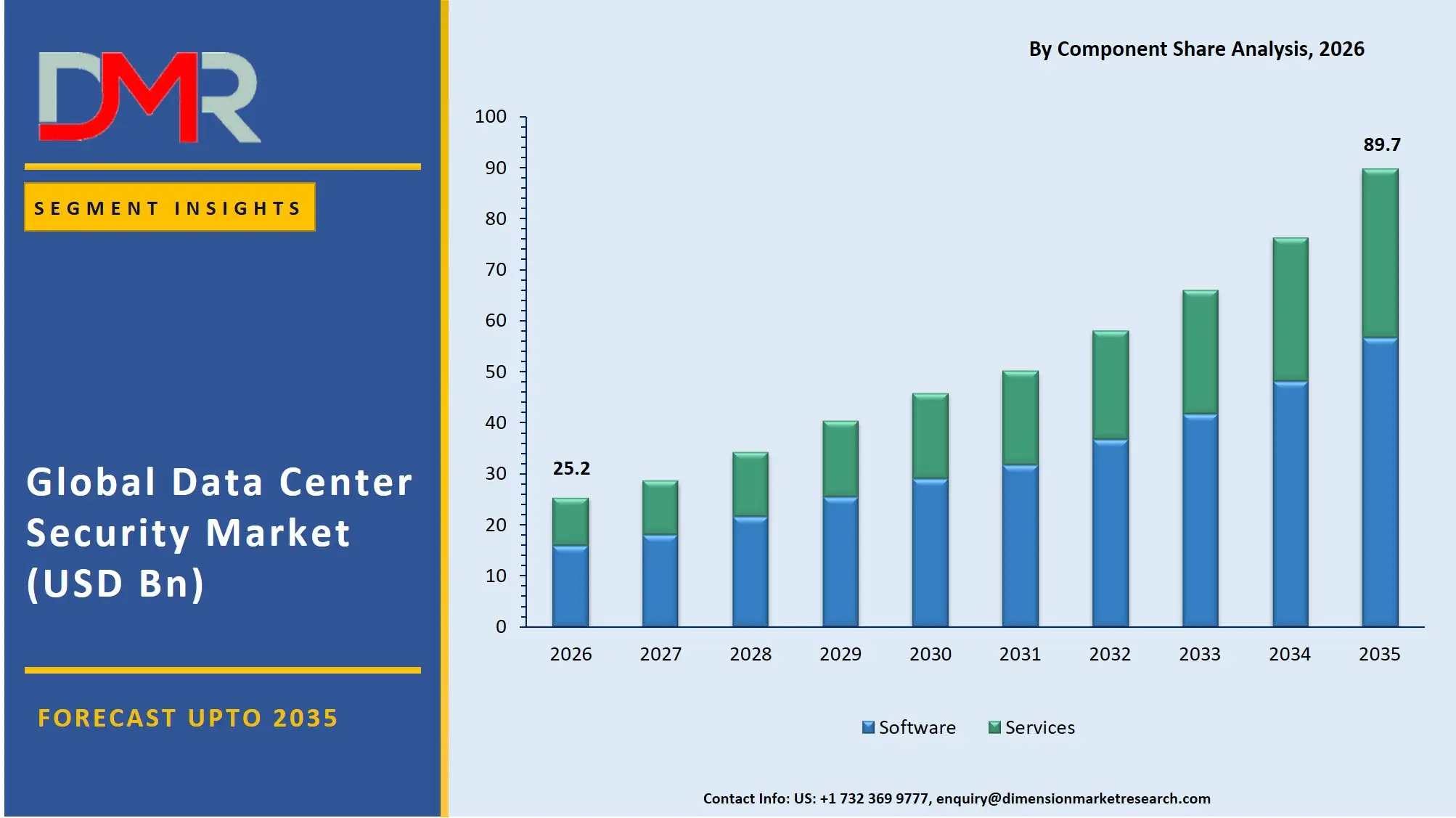
The global data center security market is witnessing strong growth driven by rising cybersecurity threats, expanding cloud and colocation infrastructure, and increasing compliance requirements. Solutions remain dominant, while hyperscale and small data centers are accelerating adoption of AI-driven, scalable, and zero-trust security frameworks across industries.
ℹ
To learn more about this report –
Download Your Free Sample Report Here
By Component Analysis
The Solutions segment is expected to dominate the Global Data Center Security Market with approximately 64.4% revenue share in 2026, supported by growing investment in physical security, network protection, identity management, endpoint security, and advanced threat detection technologies. Data center operators are deploying integrated security solutions to protect computing infrastructure, sensitive information, and critical facility operations against evolving physical and cyber threats.
Within the Solutions segment, Network Security and Identity and Access Management (IAM) represent important areas of cybersecurity investment. Firewalls, intrusion prevention systems, microsegmentation, privileged access controls, and continuous authentication help organizations protect interconnected workloads and restrict unauthorized access. Physical Security, including video surveillance, biometric access control, perimeter monitoring, and intrusion detection, remains essential for securing data center facilities and critical equipment.
The Services segment is supported by increasing demand for managed security operations, cybersecurity consulting, system integration, and continuous monitoring. As hyperscale and colocation facilities adopt hybrid security architectures, operators are increasingly relying on specialized service providers to strengthen incident response, security assessments, and regulatory compliance capabilities.
By Data Center Type Analysis
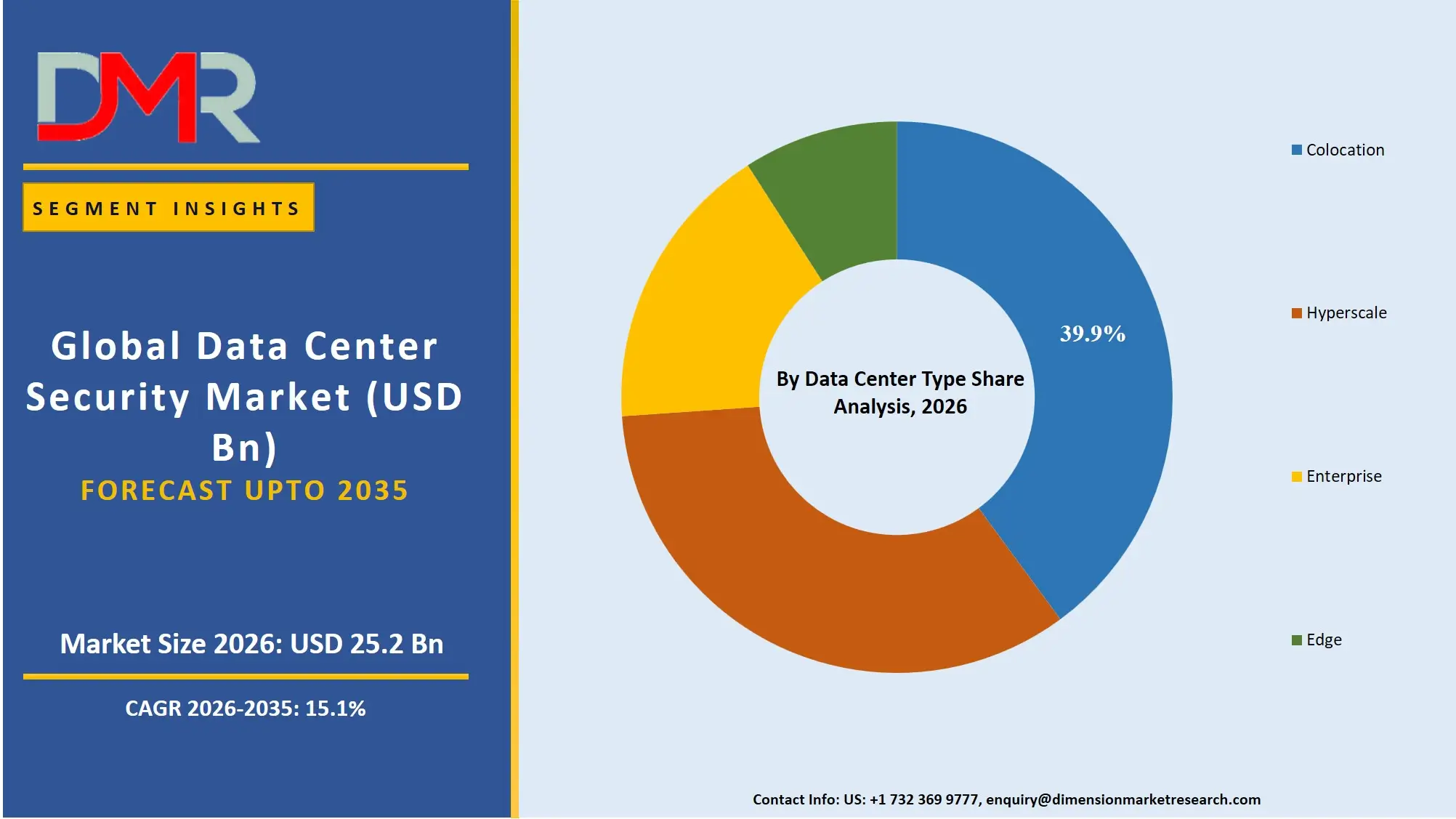
The Colocation segment is expected to account for approximately 39.9% of the Global Data Center Security Market in 2026, supported by the growing adoption of shared data center infrastructure and increasing security requirements across multi-tenant computing environments. Colocation operators invest in integrated physical security, access management, network monitoring, tenant isolation, and compliance solutions to protect customer workloads and maintain service reliability.
Hyperscale data centers are projected to register strong growth during the forecast period, driven by increasing cloud computing demand, AI infrastructure expansion, and investment in high-density computing environments. These facilities require advanced cybersecurity architectures, including Zero Trust network segmentation, workload protection, automated threat detection, and identity-based security controls to manage extensive computing infrastructure.
Enterprise data centers continue to invest in security modernization, while Edge data centers are creating additional demand for distributed and remotely managed security solutions. Differences in security expenditure across data center types depend on facility scale, ownership models, deployed workloads, regulatory requirements, and the allocation of shared security infrastructure costs.
By Data Center Size Analysis
Large Data Centers are the largest segment in 2026, accounting for 48.5% share, driven by higher asset density, exact zoning requirements, and longer compliance chains. Medium Data Centers are also a major segment, supported by established operational processes and broad enterprise familiarity. The fastest-growing area is Small Data Centers, where distributed and remote computing requires lightweight, cost-effective security appliances that can scale incrementally.
By End-User Analysis
The IT & Telecommunication segment is expected to dominate with around 28.7% market share in 2026, driven by greater enterprise focus on uptime, faster security adoption, and broader digital footprints compared to other end-users. IT security frameworks support customized protection plans because they can offer multiple levels of access control, segmentation, and yearly audits, delivering fast results while keeping data within enterprise systems. The BFSI segment is the second-largest, followed by Government & Defense. The fastest-growing segment is Healthcare, driven by increasing digitization of patient data and strict compliance requirements like HIPAA.
The Global Data Center Security Market Report is segmented based on the following:
By Component
- Solutions
- Physical Security
- Network Security
- Endpoint Security
- Application Security
- Data Security
- Identity and Access Management (IAM)
- Security Information and Event Management (SIEM)
- Threat Intelligence
- Services
- Managed Security Services
- Consulting
- Support & Maintenance
- System Integration
By Data Center Type
- Hyperscale
- Colocation
- Enterprise
- Edge
By Data Center Size
- Small Data Centers
- Medium Data Centers
- Large Data Centers
By End-User
- BFSI
- IT & Telecommunication
- Retail & E-commerce
- Media & Entertainment
- Healthcare
- Energy & Utilities
- Government & Defense
- Manufacturing
- Others
Regional Analysis
Leading Region in the Data Center Security Market
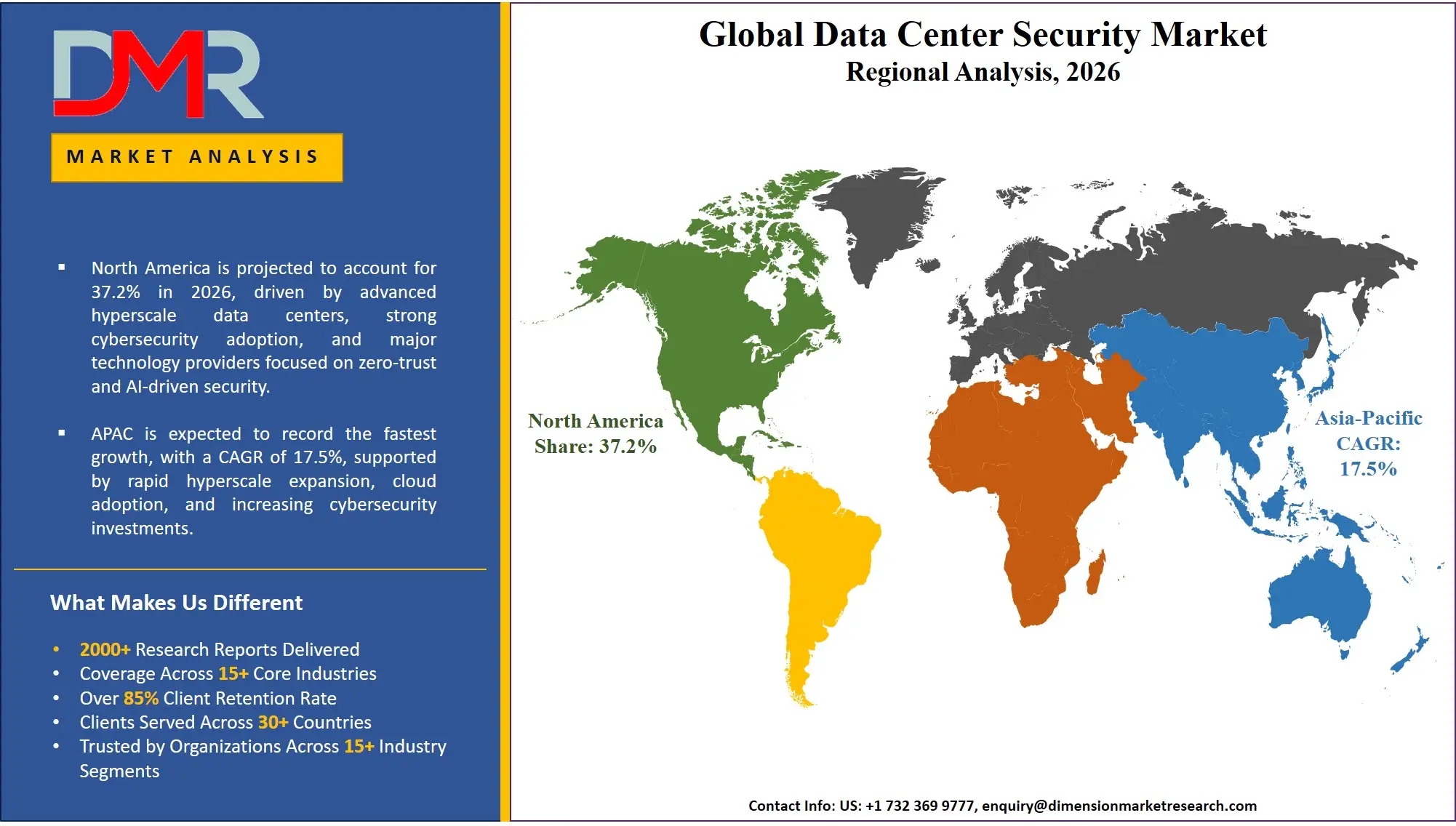
It is projected that North America will take the lead in the global data center security market (by value), covering a market share of about 37.2% in the year 2026. The region's dominance is driven by strong cybersecurity spending funded by private and public sources, higher average solution prices compared to other regions, a mature digital supply chain for advanced threat data sharing, and the presence of major security vendors and colocation networks. The widespread adoption of advanced threat processing and automation for hyperscale and enterprise data centers further strengthens North America's leading position. Additionally, ongoing investments in smart threat monitoring and system interoperability further reinforce the region's technology leadership.
ℹ
To learn more about this report –
Download Your Free Sample Report Here
Fastest-Growing Region in the Data Center Security Market
Asia-Pacific is the fastest-growing region, supported by strong digital infrastructure goals in China, India, and Japan, increasing cyber resilience awareness efforts, rising investments in local security capabilities, and growing adoption of automated threat analysis systems. The region benefits from well-established digital payment systems for cloud services, increasing business activity, and alignment with national cyber defense roadmaps. Countries across the region are actively setting up security platforms to improve deployment efficiency and strengthen infrastructure protection. Growing focus on cybersecurity research and structured threat data development further speeds up market expansion. Moreover, increasing government support and enterprise security commitments are expected to keep growth momentum high.
By Region
North America
Europe
- Germany
- The U.K.
- France
- Italy
- Russia
- Spain
- Benelux
- Nordic
- Rest of Europe
Asia-Pacific
- China
- Japan
- South Korea
- India
- ANZ
- ASEAN
- Rest of Asia-Pacific
Latin America
- Brazil
- Mexico
- Argentina
- Colombia
- Rest of Latin America
Middle East & Africa
- Saudi Arabia
- UAE
- South Africa
- Israel
- Egypt
- Rest of MEA
Competitive Landscape
The Global Data Center Security Market is characterized by competition among cybersecurity technology providers, physical security system manufacturers, cloud infrastructure security vendors, and managed security service providers. Leading participants such as Cisco, Palo Alto Networks, Fortinet, Check Point Software Technologies, IBM, Trend Micro, and Trellix provide network security, endpoint protection, identity management, threat intelligence, and security monitoring capabilities for enterprise and data center environments.
Infrastructure technology companies such as Broadcom, Dell Technologies, Hewlett Packard Enterprise, and NetApp contribute virtualization security, data protection, workload security, and infrastructure resilience solutions. Meanwhile, Schneider Electric, Honeywell, Siemens, Johnson Controls, and Vertiv participate through physical infrastructure, monitoring, facility protection, and integrated operational technologies.
Competition is influenced by security effectiveness, scalability, integration capabilities, regulatory compliance, threat detection performance, and lifecycle support. Market participants are investing in Zero Trust architectures, AI-assisted threat detection, security automation, and advanced protection for cloud and high-density computing environments. Partnerships between cybersecurity vendors, networking providers, and data center infrastructure operators are becoming increasingly important as facilities adopt more complex computing architectures.
Some of the prominent players in the Global Data Center Security Market are:
- Cisco Systems, Inc.
- International Business Machines Corporation (IBM)
- Palo Alto Networks, Inc.
- Fortinet, Inc.
- Check Point Software Technologies Ltd.
- Broadcom Inc. (VMware)
- Trend Micro Incorporated
- Trellix
- Hewlett Packard Enterprise Company
- Dell Technologies Inc.
- Schneider Electric SE
- Honeywell International Inc.
- Siemens AG
- Johnson Controls International plc
- Huawei Technologies Co., Ltd.
- NetApp, Inc.
- Cloud Software Group (Citrix)
- Vertiv Holdings Co.
- Other Key Players
Recent Developments
- In June 2026, F5 introduced its AI Security Platform to provide continuous visibility, governance, and protection across enterprise AI applications, models, agents, and APIs. The company also announced the acquisition of SurePath AI, strengthening capabilities for AI discovery, monitoring, and security across enterprise and cloud infrastructure.
- In June 2026, Accenture announced agreements to acquire a majority stake in Dragos and acquire runZero and NetRise to expand its operational technology cybersecurity capabilities. The initiative targets critical infrastructure environments, including data centers, with integrated asset visibility, device security, and threat detection capabilities.
- In May 2026, Zscaler announced its intention to acquire Symmetry Systems to strengthen Zero Trust security and identity-based data access governance. The acquisition focuses on mapping relationships between users, applications, AI agents, and sensitive data across enterprise cloud environments.
- In December 2025, Fortinet and Arista Networks announced a joint Secure AI Data Center solution, deployed at Monolithic Power Systems. The solution combines Fortinet security capabilities with Arista's low-latency networking infrastructure to support scalable, Zero Trust protection for AI data center operations.
Report Details
| Report Characteristics |
| Market Size (2026) |
USD 25.2 Bn |
| Forecast Value (2035) |
USD 89.7 Bn |
| CAGR (2026–2035) |
15.1% |
| The US Market Size (2026) |
USD 7.9 Bn |
| Historical Period |
2021 – 2025 |
| Forecast Period |
2027 – 2035 |
| Base Year |
2025 |
| Estimated Year |
2026 |
| Segments Covered |
By Component, By Data Center Type, By Data Center Size, By End-User |
| Regional Coverage |
North America – The US and Canada; Europe – Germany, The UK, France, Russia, Spain, Italy, Benelux, Nordic, & Rest of Europe; Asia-Pacific – China, Japan, South Korea, India, ANZ, ASEAN, Rest of APAC; Latin America – Brazil, Mexico, Argentina, Colombia, Rest of Latin America; Middle East & Africa – Saudi Arabia, UAE, South Africa, Turkey, Egypt, Israel, & Rest of MEA |
Frequently Asked Questions
How big is the Global Data Center Security Market?
▾ The Global Data Center Security Market size is estimated to have a value of USD 25.2 billion in 2026 and is expected to reach USD 89.7 billion by the end of 2035.
What is the CAGR of the Global Data Center Security Market from 2026 to 2035?
▾ The market is growing at a CAGR of 15.1% over the forecasted period.
What factors are driving the growth of the Global Data Center Security Market?
▾ The market is driven by advances in smart AI-based threat detection, regulatory pressure to speed up cyber defense results and reduce breaches, and increased government investment in national cyber resilience infrastructure.
What are the major trends in the Global Data Center Security Market?
▾ The key market trends include the adoption of predictive threat risk tracking and real-time security data analysis, along with a growing shift toward cloud-based security platforms and data-enabled asset management systems.
Which region held the largest share of the Global Data Center Security Market in 2026?
▾ North America is expected to account for the largest market share in 2026, with a share of about 37.2%.
Which region is expected to grow the fastest in the Global Data Center Security Market?
▾ Asia Pacific is the fastest-growing region in the market during the forecast period.
Who are the key players in the Global Data Center Security Market?
▾ Some of the key players in the Global Data Center Security Market include Cisco Systems, Inc., IBM Corporation, Palo Alto Networks, Inc., Fortinet, Inc., Check Point Software Technologies Ltd., Broadcom Inc. (VMware), Trend Micro Incorporated, Trellix, Hewlett Packard Enterprise, Dell Technologies Inc., Schneider Electric SE, Honeywell International Inc., Siemens AG, Johnson Controls International plc, and other key players.
How is the Global Data Center Security Market segmented?
▾ The market is segmented by component, data center type, data center size, and end-user.